
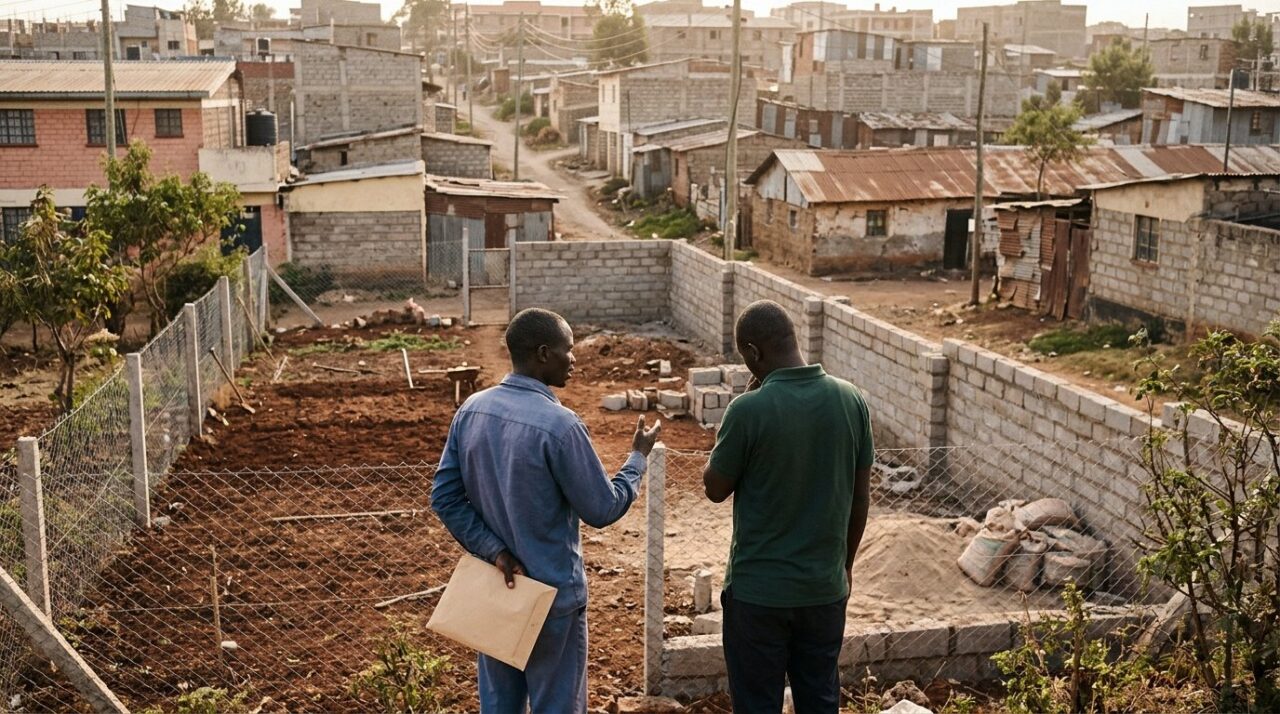
In Kenya, a land sale must be in writing, and a buyer who says he paid must be able to prove it. A buyer who claims he paid cash, but has no written agreement and nothing to show the payment, cannot simply keep the land on his word alone.
What the law requires
Under section 3(3) of the Law of Contract Act, a contract for the sale of land must be in writing, signed by the parties and attested by a witness. Section 38 of the Land Act reinforces this. In plain terms, a bare oral agreement, where two people just shake hands and agree, cannot be enforced.
The three things to look for in a proper land sale agreement are:
- It is in writing.
- It is signed by the parties.
- It is attested by a witness.
Proving that you paid
Writing is only half of it. A person who claims to have paid must also prove the payment. This can be done, for example, with a receipt, a bank record or an acknowledgment from the seller.
Think of a buyer who hands over a bundle of notes in a plot owner’s compound, with nobody watching and nothing written down. If the seller later says he was never paid, the buyer has very little to point to. Saying "I paid" is not the same as showing it.
Who holds the title
Under the Land Registration Act, the registered proprietor, here the seller, holds the title until a valid transfer is made. A buyer with no written agreement and no proof of payment cannot compel the transfer of the land on his word alone.
The Environment and Land Court applied this thinking in Okonya v Onyango, where a buyer who said he had paid in cash but produced no proof could not keep the land. The decision may be appealed, so it should be read as the position of that court at that stage.
What you can do in practice
- Insist on a written agreement, signed by both sides and witnessed, before any money changes hands.
- Pay by bank transfer or another method that leaves a record, where you can.
- If you pay in cash, ask for a signed receipt or acknowledgment there and then.
- Keep copies of everything and store them safely.
- Speak to an advocate before you pay for land, not after a dispute starts.
The courts may sometimes look at special situations, but nobody should plan a land purchase around that. The safest course is a proper written agreement and clear proof of every shilling paid.
📚 Okonya v Onyango [2026] KEELC 6785 (KLR)
Entertainment and general information, not legal advice. For advice on your own situation, speak to an advocate.